
There is no way to guarantee not being hated online, if you live in this world
To have any kind of online presence as a woman is to live in a Black Mirror episode. And you've no control over whether you have one or not.

The existence of ‘influencer’ as a job is kind of weird and I do not entirely understand it, but I do know - like so many of us - what it is like to ‘live’ online, or at least have some kind of public profile, however tiny. If you’re in the arts - like, say, a writer - you’re expected to have something up; increasingly it seems people in other roles are expected to engage in this kind of self-promotion as well (not just a LinkedIn profile or company page but ongoing updates, aware that your next employer will be looking). The gig economy! The perils of capitalism!
There is a mistake people often make - I’ve witnessed it with potential self-published writers being told ‘if you’ve 1000 followers, that’s 1000 sales’ (NO. NO. NO.) - about how much impact social media really has in terms of people’s material lives, in money-making.1 I think about how many popular pop-culture-meme accounts I follow that lure you in with content from familiar sources, and then try to sell merch - do I purchase it? I do not. And I suspect you don’t either.2 I think about how many Substacks I follow and how many I pay for (a fraction of them, and every single one is someone who already had an established profile in traditional media).3 I firmly believe writers should be paid for their work (obviously), but I also think most of us are not in a position to be patrons of the arts in big-scale ways. (And the balance has not tilted to individual publications just yet; there are still newspapers and magazines to subscribe to, which we should be doing rather than trying to evade paywalls…)4
But I digress. What I’m getting at, more so, is how these little niche corners of the internet can make it feel as though individuals are - corporations.5 Celebrities. So big that they cannot possibly be hurt, so wealthy that they must surely have assistants filtering through all the hateful stuff flung at them, so important that online abuse is… just what they have coming.
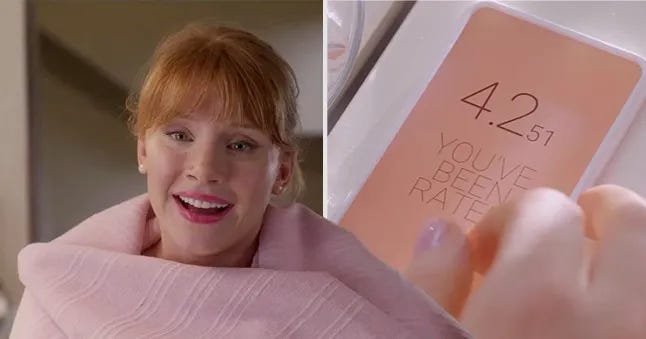
And it is particularly, particularly acute when it comes to women. I mean, we know this. The abuse Irish influencers have received has been written about by Rosemary McCabe and Jen Hogan this weekend, in light of a recent case, and there are a few things I think are worth noting:
people having day jobs (i.e. this isn’t just a case of swanning around promoting luxury products - it’s part of the hustle/gig economy)
mothers trying to do the best for their kids (I’m not getting into ethics about ‘using kids for content’ here, but having to play up to maternal ideas of womanhood in order to make money is not a new thing)
the cruelty and entitlement and stalkerish behaviour of a kind that is impossible to ignore (your digital footprint matters - even if you personally ignore it, you cannot ask everyone who might ever want to interact with you, befriend you, hire you, deal with you in a professional sense to ignore it)
the judging, the endless judging, the horribleness of it (it’s like being back in school, sneering at people who are trying hard/visibly, or who are putting themselves out there, but the anonymity empowers people to be even more wretched about it, and also makes it permanent - imagine if every bitchy thing muttered about you in your life was scrawled on your skin in permament marker)
the real-world consequences, the fear (which I think is maybe particularly acute in small places like Ireland, where gossip runs amok anyway), the fact that it is total bullshit to suggest that it’s ‘just’ the internet anymore. We’re past that. This is not niche. This is Scarlet-Letter, sending-to-Coventry levels of shaming, and it’s not just about some women having some feelings (which I understand we mostly do not care about, in this world). It’s about women as part of our communities, our lives, and how we treat them.
Even as I type this there’s a bit of me going ‘yeah, Claire, you’re doing the starving-artist thing… these women do not need your sympathy. They’re sorted. Sure look at them there in the papers getting more attention for themselves.’ But I don’t want to lack empathy (or indeed to be stupid enough to imagine that temporary attention equals cold hard cash). I also know how little it takes for the internet - sorry, for our fellow humans - to think it’s okay to have a go. Writing a piece in a local paper, probably unpaid or at best badly-paid. That’ll do it. Being featured in a local paper (no money, often little say in it) - that too.
A tiny side-hustle that might net a thousand quid a year (but takes up ten hours a week). Writing a review of a children’s book (volunteer basis) that some people decide to object to. Going on local radio once to talk about a area you work in, and not having enough time to mention everything someone else in the field wants you to. These are not fancy-level things. They’re the equivalent to volunteering for your local GAA club, or helping out at your kids’ school, or giving grinds to a neighbour - small ways of doing something in your community/field, with no or limited financial compensation. That’s a really low bar.
The internet has made it possible to take these small-scale grievances and bitching - which of course always happen, no matter what - and turn them from small-town gossip or shite-down-the-pub into a matter of public record. I’m thinking here too of the “GAA catfish” teacher, which on the one hand I do not want to drag up again and on the other I think: fucking hell. This should terrify all of us.
We like to imagine people (women) who are talked about - who are hated - have done something to deserve it. Sure, she was asking for it. We like to imagine them as other. We like to delude ourselves into thinking that we are smart and good and kind and sensible and nothing of this sort could ever happen to us, and it is exactly the same logic that we use when we think about the other shitty things that happen to women. (I am not suggesting character assassination and assault or murder are the same thing. I trust you get that.)
I gave a workshop the other week where the older Catholic idea of “calumny and detraction” came up, from the days of being quizzed on the catechism.6 Both involve injuring someone’s good name - calumny is by lying about them, detraction is more by bitching about them when you’ve no good reason to. These are sins, heavy-duty variety, and they are malicious and evil and bad and look, while I immediately see that the church could leverage this as a way of silencing people, yes yes we all got there, the moral principle is a good one.
And even if we are human and can’t resist, there is a difference between on and off the record. We know this from many workplaces - does this go in an email or do we have a phone call about it? And even when we think we’re being careful about it - grumbling to a WhatsApp chat rather than somewhere public - we can get into trouble about it. Or we can stir up trouble for others in a seemingly ‘closed’ space that has hundreds or thousands of members. We can lose ourselves in a mob and convince ourselves that we’re just a tiny helpless individual, ‘punching up’.7
This is a tiny Substack post and not exactly a call to arms, or indeed saying anything radical about women-in-society, but the thing I do hope people might take away from this is that the bar is low. It’s really, really low. This viciousness is not limited to the kind of women who are ‘looking for notice’ or ‘getting above themselves’ or ‘think they’re great’. It’s a possibility for anyone who is participating in society - for anyone who works, for anyone who interacts with other human beings in any way, for anyone who does anything for their community in any capacity, for anyone trying to date or make friends or join a club or go to the shops or do anything, ever.
There is this constant contradiction of thinking that followers on social media = real tangible money, and overestimating how much that might be, but then thinking that social media abuse could not possibly impact on people’s real lives and indeed livelihoods because ‘it’s just some people on the internet’.
Maybe you do, but not all of it, all the time. And in no universe is anyone clicking ‘purchase’ every single time they see a post or watch a video/reel/whatever-we’re-calling-them-these-days.
I also hear a lot about ‘you can make loads of money from Substack!’, as I guess we all do, and there’s a lot of rose-tinted spectacles happening there, with people not appreciating that journalists with existing profiles and audiences are in a different position to person-who-is-just-starting-a-blog.
The feeling that we should get everything for free while also wanting to be paid for work done is a mood, usually justified by ‘but giant corporations!’ and therefore it is OK to steal from them. Are the top CEOs hurting from this, no. Are the people creating work being impacted? Yeah.
The inverse of ‘corporate personhood’, where instead of humanising a legal entity we dehumanise a person.
“Detraction and calumny destroy the reputation and honor of one's neighbor. Honor is the social witness given to human dignity, and everyone enjoys a natural right to the honor of his name and reputation and to respect. Thus, detraction and calumny offend against the virtues of justice and charity.” - the catechism yoke
“The snowflake never needs to feel responsible for the avalanche.” - Jon Ronson, So You’ve Been Publicly Shamed